2026 Hermes H-Buckle Belt Guide: Spotting Fakes with These Key Details!
2026 Hermès H-Buckle Belt Guide: Spotting Fakes with These Key Details!
Even in 2026, the Hermès H-buckle belt (what we often call H-brand or Hermès) remains a major hotspot for so-called “obvious fakes.” Many people searching for “Hermès belt real vs fake” actually feel quite anxious, afraid they might spend several thousand or even tens of thousands only to end up with a glaringly bad knockoff. Today, using this picture as reference, let’s talk about how to avoid these pitfalls.
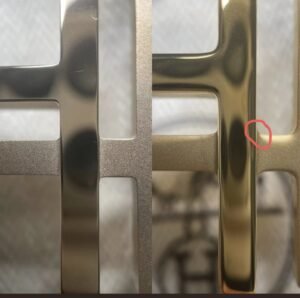
What secrets does this “metal” hide?
First, stare at this H-buckle. Don’t think shiny means good quality. Top-tier goods (what we in the circle call high-tier or factory-direct batches) have very fine brushing on the hardware. Look at the shiny silver buckle in the picture. Authentic pieces have a very gentle, mirror-like polish that doesn’t feel cheap. Many low-end generic batches have a harsh, glaring reflection that looks like unevenly electroplated plastic from a street stall. Some might even start peeling or discoloring within days. Avoid this trash at all costs.
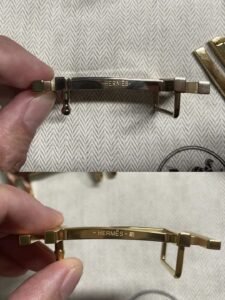
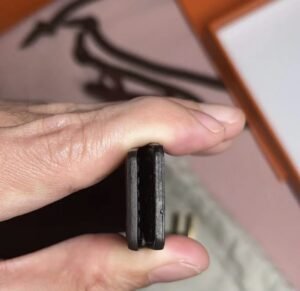
Another critical detail is the chamfer on the sides. The edges of the H-buckle actually have a slight curve, not a straight, sharp cut. If it feels sharp to the touch, it’s definitely from a garbage factory. Also, the spring mechanism on the back of the buckle—authentic ones make a very crisp sound when pressed, not a soft, mushy feeling.
The leather is the soul—don’t be fooled by the words “genuine leather”
Now look at the belt body. The grainy texture in the picture is very clear—this is what we call Togo leather. Many beginners can’t tell Togo from Box leather, but it’s actually simple. Togo has this pebbled texture, soft and plush but not saggy. Press it with your fingertip, and the grain spreads out like a flower and bounces back. Box leather, on the other hand, is that glossy, smooth finish, feeling as smooth as a young girl’s cheek, but it’s extremely delicate—a fingernail scratch leaves a mark.
What’s infuriating is some factories take split leather, emboss a pattern, and dare to call it Togo. That kind of leather smells strongly of pungent glue, completely lacking Hermès’s subtle, high-end leather scent. Wear that on your waist for a few months, and the edge paint starts cracking. Embarrassing, right? Seriously, good leather has breathability—it’s the scent of age, not chemicals.
Those “codes” hidden in the shadows
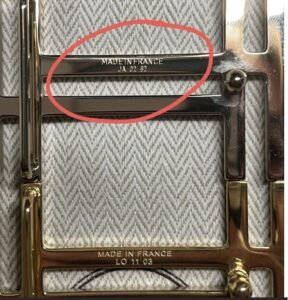
When it comes to stamps, this is a disaster zone. Here’s a human tip: don’t memorize those year-code correspondence charts—they’re meaningless. Factories nowadays stamp these things more diligently than the authentic ones. What you need to look at is the “force.”
Authentic stamps are hand-stamped. Each letter might have a tiny variation in depth, but they’re very neat. Many cheap replicas use laser engraving machines, with edges so uniform it’s eerie—utterly soulless. Especially the “Made in France”—many fakes have the letters crammed together like a bunch of ants fighting. Makes you want to vent.
How to avoid getting scammed?
Honestly, in the current market, blindly searching online by yourself will likely cost you tuition fees. I’ve taken my share of falls too, buying those “pure original” batches hyped to the skies, only to find the stitching wasn’t even aligned when they arrived. Later, I got smarter: when looking for platforms, find ones with QC (quality control).
Platforms like Litbuy—their verification process is actually quite something. They’re not the type that just glances and ships. They take those high-definition QC photos where you can see the pores. If you think the stitching is a bit off, or there’s a tiny scratch on the hardware, you can just stop it right there. That sense of security is truly stronger than you studying authenticity comparison pictures for hours. In this circle, trust is more valuable than gold.
A few rambling thoughts
Writing this, I actually feel quite emotional. Buying replicas isn’t about pretending. Sometimes it’s purely because the authentic price is just absurd, with markups that are terrifying. But pursuing high value-for-money doesn’t mean buying garbage to annoy yourself. Buying things is about happiness. If you wear it out and people point fingers behind your back saying, “Look at that person wearing an obvious fake,” that feels worse than swallowing a fly.
So, this 2026 pitfall avoidance guide—I hope it helps those friends still struggling. Don’t just look at pictures. Ask veterans more, check the reputation of big factories more. After all, our money doesn’t grow on trees.
Seriously, sometimes looking at those shoddy fakes, then thinking about those people wasting their money, makes me inexplicably furious. I hope everyone can buy what they truly desire, whether it’s authentic or top-tier replicas. What matters most is that you like it and wear it with dignity.