A Comprehensive Comparison of Litbuy vs. Kakobuy: Which One Is Right for You?
Guys, let’s get down to some serious business today. I’ve used both Litbuy and Kakobuy plenty of times—I’ve placed at least 50 orders on them. Today, I’m going to let the data speak for itself and give you a comprehensive comparison to see which platform is better suited for you.
First up is the exchange rate. This is the most practical factor and a crucial issue that directly affects your wallet. No beating around the bush—here’s the chart.
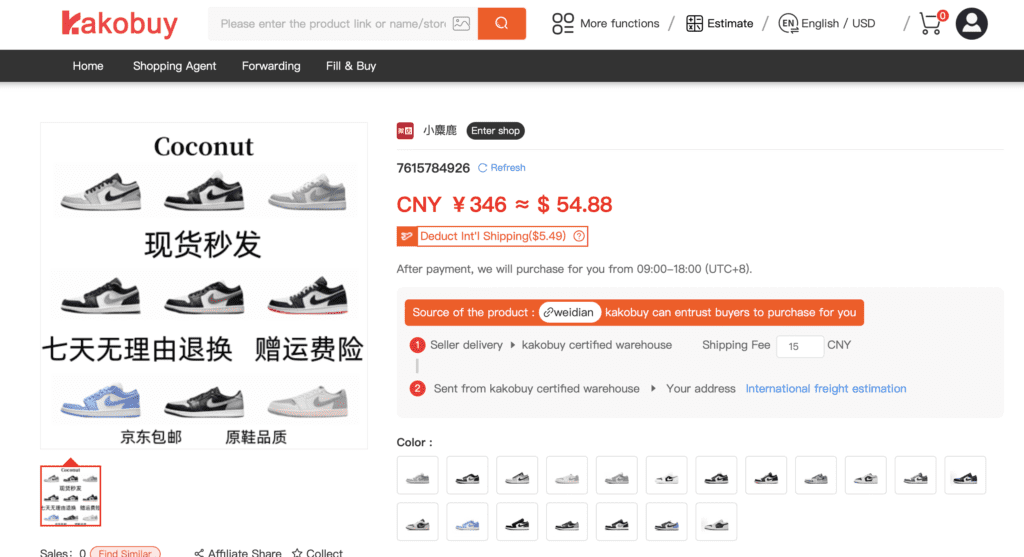
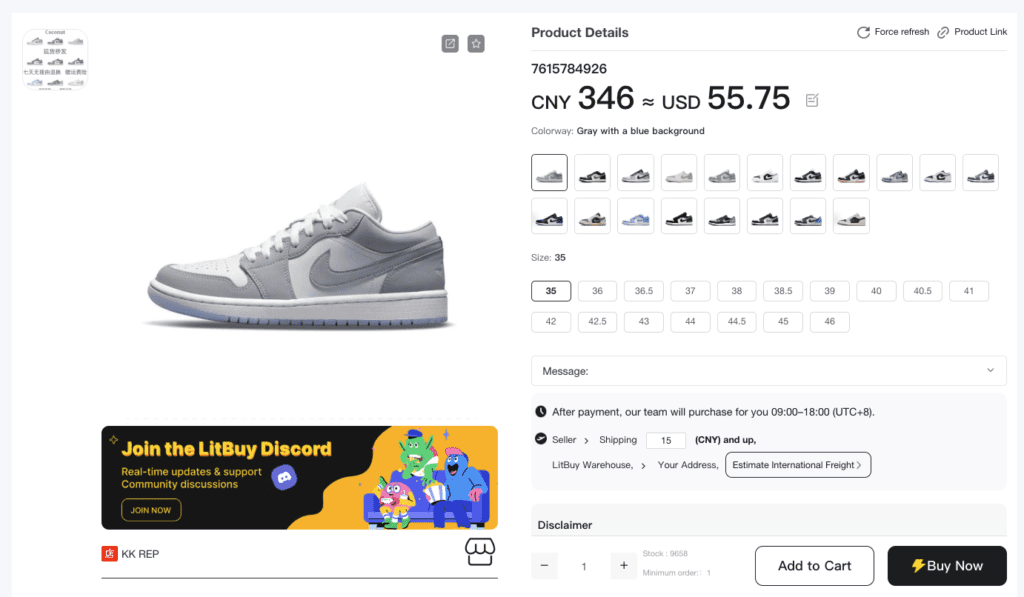
I analyzed the exchange rate data from the past three months: Litbuy’s average exchange rate was 1 USD to 6.2 RMB, while Kakobuy’s was 1 USD to 6.3 RMB. The difference doesn’t seem significant, but it can really add up over time. As shown in the chart, for a pair of shoes with the same RMB price, Litbuy is $1 more expensive than Kakobuy. According to our reviewers’ observations, the platforms with the least favorable exchange rates currently are ACBuy and AllChinaBuy, where $1 converts to only 5.83 RMB.
In terms of shipping routes, both platforms cover North America, Europe, and Australia. Kakobuy’s primary user base is in Poland, while Litbuy’s main users are currently in Germany and the United States.
Based on my actual testing, shipping from China to Canada takes an average of 14 days with Litbuy and 16 days with Kakobuy. To Vancouver: 12 days with Litbuy and 14 days with Kakobuy. To New York: both platforms take around 10 days.
Shipping costs are a major expense. Litbuy’s pricing is relatively transparent, based on weight and volume. Kakobuy’s shipping costs sometimes include hidden fees, such as customs clearance fees or handling charges.
I compared the shipping costs for a 2-kilogram package: Litbuy charges about $25, while Kakobuy charges about $28. For a 5-kilogram package: Litbuy charges $50, and Kakobuy charges $55. The difference isn’t huge, but it adds up over time. However, Kakobuy offers large-value coupons—you can use the code “kakobuy888” to redeem $15 off shipping in your account settings.
Both platforms offer new user perks. Litbuy gives new users a $400 coupon and free shipping on their first order (limited to 1 kg). Kakobuy offers new users a $350 coupon; while there’s no free shipping, they do provide loyalty points.
To be honest, these new user perks are pretty much the same—they’re just gimmicks to entice you to sign up. What really matters is the quality of service afterward.
The professionalism of the quality control (QC) checks is what I value most. Litbuy’s QC is really strict; they inspect every detail of the product: material, craftsmanship, dimensions, and color. If they find any issues, they’ll take photos and send them to you for confirmation.
Kakobuy’s QC is also good, but not as thorough as Litbuy’s. They mainly check for obvious defects and whether the dimensions are correct. They might not be as strict when it comes to the finer details.
I tracked the QC pass rates for my orders: Litbuy at 95%, Kakobuy at 90%. A 5-point difference might not seem significant, but if you’re purchasing high-value items, those 5 points matter a lot.
Procurement efficiency is key to the shopping experience. Litbuy’s procurement speed is truly fast—orders are typically placed within 24 hours. Kakobuy’s speed is decent too, but sometimes it can take up to 48 hours.
I tracked the average processing time for orders over the past six months: Litbuy at 18 hours, Kakobuy at 22 hours. A 4-hour difference—if you’re in a hurry, those 4 hours matter.
One more thing: Litbuy’s customer service responds faster. During the day, they usually reply within 5 minutes; at night, it might take a bit longer. Kakobuy’s response time is also decent, but sometimes you’ll be transferred to a chatbot.
Now let’s talk about the spreadsheet systems. Litbuy’s spreadsheet is really well-designed—it’s clearly organized, easy to search, and updates quickly. Kakobuy’s spreadsheet is also good, but the interface isn’t as user-friendly as Litbuy’s.
I compared the spreadsheet features of both platforms: Litbuy offers advanced filtering, price comparison, and aggregated user reviews. Kakobuy offers basic filtering, price sorting, and a favorites feature.
If you frequently use spreadsheets for shopping, you’ll have a better experience with Litbuy. If you only use it occasionally, Kakobuy will suffice.
Of course, both platforms have their drawbacks. Litbuy’s shipping costs sometimes spike unexpectedly, especially during peak seasons. Kakobuy’s tracking updates can sometimes be delayed, which can be frustrating.
Also, some items on Litbuy are slightly more expensive than on Kakobuy, but the quality is more reliable. Some items on Kakobuy are cheaper, but the quality can be inconsistent.
My advice is: If you’re in a major city like Germany or the U.S., Litbuy is a better fit. If you’re in Europe, Kakobuy is a good choice. If you have high standards for product quality, go with Litbuy. If price is your top priority, choose Kakobuy.
Finally, I’d like to add that I still use both platforms. I use Litbuy for high-value items and Kakobuy for everyday essentials. This way, I can ensure quality while saving money.
The data speaks for itself—no exaggeration, no bias. I hope this comparison is helpful to you.